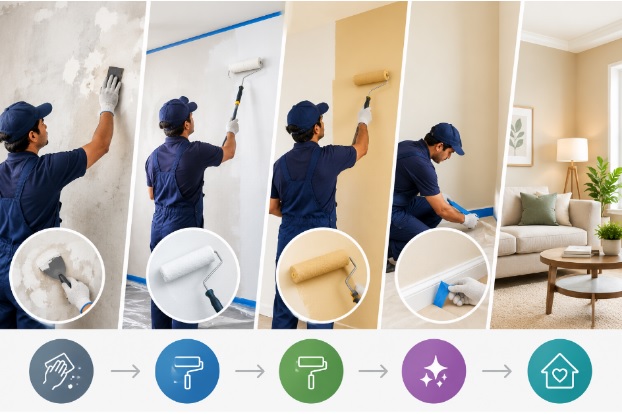

Anyone who has compared a DIY paint job with the work of professional painters has probably noticed the difference isn’t really about the paint brand used. It’s about everything that happens before the roller ever touches the wall, and everything that happens after the final coat dries.
In Hyderabad, where homes range from decades-old independent houses to newly built apartments, the condition of the walls varies enormously, and it’s this preparation and finishing process, more than anything else, that separates an average result from a genuinely professional one.
Step 1: Inspection Before a Single Brushstroke
Professional painters typically begin with a walkthrough of the entire home, not just a quick glance at the walls that “look fine.” This inspection identifies dampness patches, hairline cracks, peeling or flaking paint, algae growth in bathrooms or balconies, and areas where previous paint has started to chalk or powder.
Skipping this step is the single biggest reason DIY and even some rushed jobs fail early, since fresh paint applied over a compromised surface will crack or peel again within months regardless of paint quality.
Step 2: Surface Preparation
Once problem areas are identified, the real groundwork begins. This includes scraping off loose or flaking paint, sanding down uneven patches, filling cracks and dents with putty, and allowing adequate drying time before moving forward. Walls with dampness issues may need a specific damp-proofing treatment before any paint goes on; otherwise, the problem simply resurfaces under the new coat.
This stage is time-consuming and easy to rush, but it is exactly where trained painters near me and elsewhere earn their reputation, since a smooth, even base is what allows the final coat to look uniform rather than patchy.
Step 3: Primer Application
Primer is often treated as an optional step by inexperienced painters, but it plays a functional role: it seals the surface, improves paint adhesion, blocks stains from bleeding through, and ensures the topcoat colour appears true rather than uneven or patchy in places.
Professional house painting teams typically apply primer as a non-negotiable step, particularly on new plaster, repaired patches, or walls transitioning from a dark colour to a much lighter one.
Step 4: Application Technique
This is where training and experience become most visible. Skilled painters who have gone through structured, hands-on training, often running into hundreds of hours of supervised practice, know how to maintain a consistent “wet edge” so that lap marks don’t appear, how to load a roller correctly to avoid drips and stipple patterns, and how to cut in clean, sharp lines along ceilings, corners and trim without needing excessive masking tape. The number of coats applied, and the drying time allowed between them, is also carefully managed rather than rushed to finish the job quickly.
Step 5: Finishing and Quality Checks
The final stage involves checking the work under different lighting conditions, natural daylight and artificial light in the evening, since imperfections that are invisible under one type of lighting can be obvious under another.
Reputable painting services also do a final walkthrough with the homeowner, addressing any missed spots, uneven patches or smudges before considering the project complete. This is also the stage where a genuine quality guarantee matters, since it signals that the team stands behind their work rather than considering the job done the moment paint is dry.
Why This Process Matters More Than Brand Alone
It’s tempting to assume that using an expensive, premium paint brand automatically guarantees a great result, but even the best paint applied over poorly prepared walls, without proper primer or attention to technique, will fail early. This is precisely why professional painters emphasise process as much as product, and why a detailed, transparent quote from any painting service should specify the preparation steps included, not just the paint brand and number of coats.
Choosing the Right Team
When evaluating painters near me for a home in Hyderabad, ask specific questions: How is wall condition assessed before quoting? What surface preparation is included? Is primer application standard or an add-on? How many coats are planned, and what is the timeline for completion? The answers reveal a lot more about the likely quality of the finished job than the price alone ever will.
Timelines Matter Too
Beyond the quality of the finish, on-time project completion is another mark of a professional team. Homes often need to be partially vacated or have furniture shifted and covered for the duration of the work, so a painter who communicates a realistic schedule upfront and sticks to it saves homeowners real disruption. Delays are usually a sign of poor planning around drying times, labour availability or material procurement, all of which should have been accounted for at the quoting stage.
The Real Difference
Ultimately, the gap between an average paint job and a genuinely professional one comes down to discipline in process: careful inspection, thorough preparation, correct primer use, skilled application and a final quality check. For homeowners planning house painting, understanding this process makes it much easier to evaluate quotes, ask the right questions, and set realistic expectations for both the timeline and the finished result.