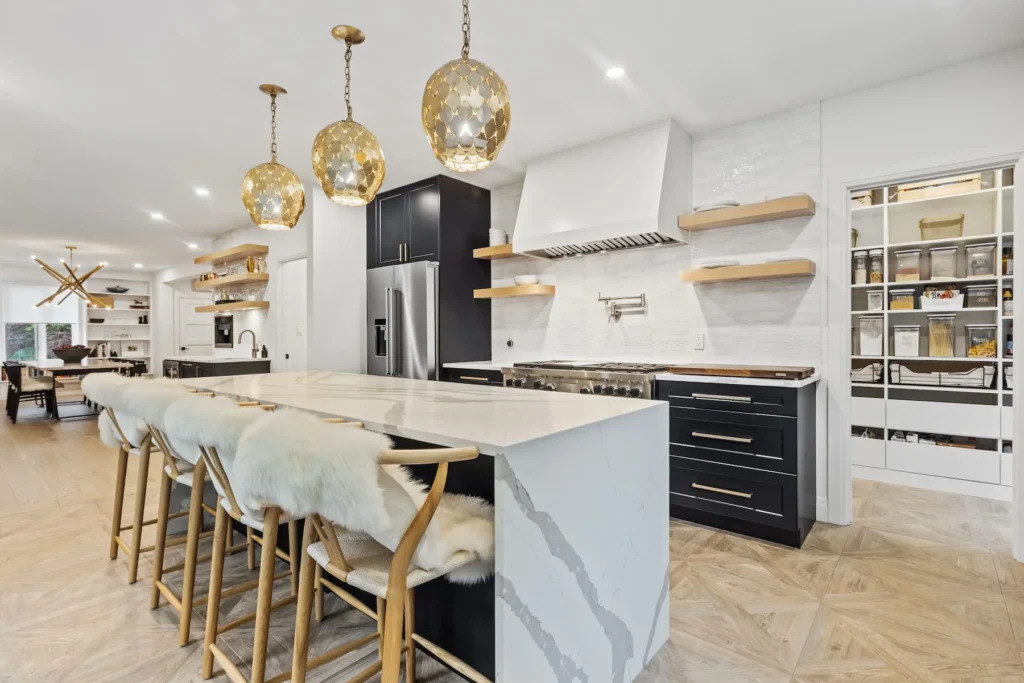

The kitchen carries more of daily life than almost any other room. It is where meals begin, conversations continue and routines meet. Because it works so hard, a simple surface-level refresh may not solve the problems that affect how the room feels and functions. A more considered approach starts with how people actually use the space, then builds design choices around that reality.
A Better Starting Point
Paint, handles and new appliances can change the look of a room, but they do not always improve movement, storage or comfort. When a kitchen has awkward corners, poor lighting or too little preparation space, those issues often remain after a cosmetic update. A deeper redesign can address the layout first, which gives every later choice a clearer purpose.
This is one reason luxury kitchens are often planned from the inside out. The focus is not only on visible finishes. It also includes drawer positions, clear walking routes, practical work zones and places for items that otherwise collect on benches. Small decisions can make the room easier to use every day.
Design That Supports Real Routines
A good kitchen should match the household rather than forcing the household to adapt to it. A keen cook may need generous preparation space and storage near the hob. A family may benefit from a wide island, easy-clean surfaces and a clear place for school bags or quick breakfasts. Someone who entertains often may prefer a layout that lets guests gather without blocking the cooking area.
These choices are more useful when they are made early. Moving a sink, changing the position of tall cabinets or creating a pantry can affect plumbing, power and circulation. Treating the project as a complete design task helps these parts work together instead of becoming a series of separate fixes.
Materials Need to Earn Their Place
Beautiful materials matter, but appearance is only one part of the decision. Worktops face heat, spills and constant contact. Cabinet doors are opened many times a day. Flooring needs to cope with traffic and cleaning. A finish that looks impressive in a sample can feel less suitable if it needs more care than the household wants to give it.
Well-planned luxury kitchens balance visual character with practical demands. Timber, stone, metal and painted finishes can all create warmth or contrast, but their value comes from using them in the right places. The strongest schemes usually have a clear material story rather than many competing features.
Lighting Changes How the Room Works
Kitchen lighting has several jobs. General lighting helps people move safely. Task lighting makes chopping and cooking easier. Softer lighting can make the room feel calmer when the work is done. Relying on one central fitting often leaves shadows exactly where light is needed most.
Layering light also gives the room flexibility. Bright work lighting can support morning routines, while warmer, lower light can suit dinner or conversation. Positioning switches thoughtfully matters too, especially in open-plan spaces where the kitchen may remain visible from living areas.
A Long-Term View
Good planning also considers maintenance. Easy access to service points, sensible ventilation and storage that does not depend on hard-to-reach gaps can reduce daily frustration. These details are not dramatic, but they often decide whether a kitchen remains pleasant to live with after the first excitement fades.
The best luxury kitchens feel special because many practical decisions have been resolved before the room is finished. They support cooking, gathering and everyday movement without demanding attention. That is what lifts a project beyond an upgrade. It turns the kitchen into a carefully planned part of the home that can keep working well as routines change.