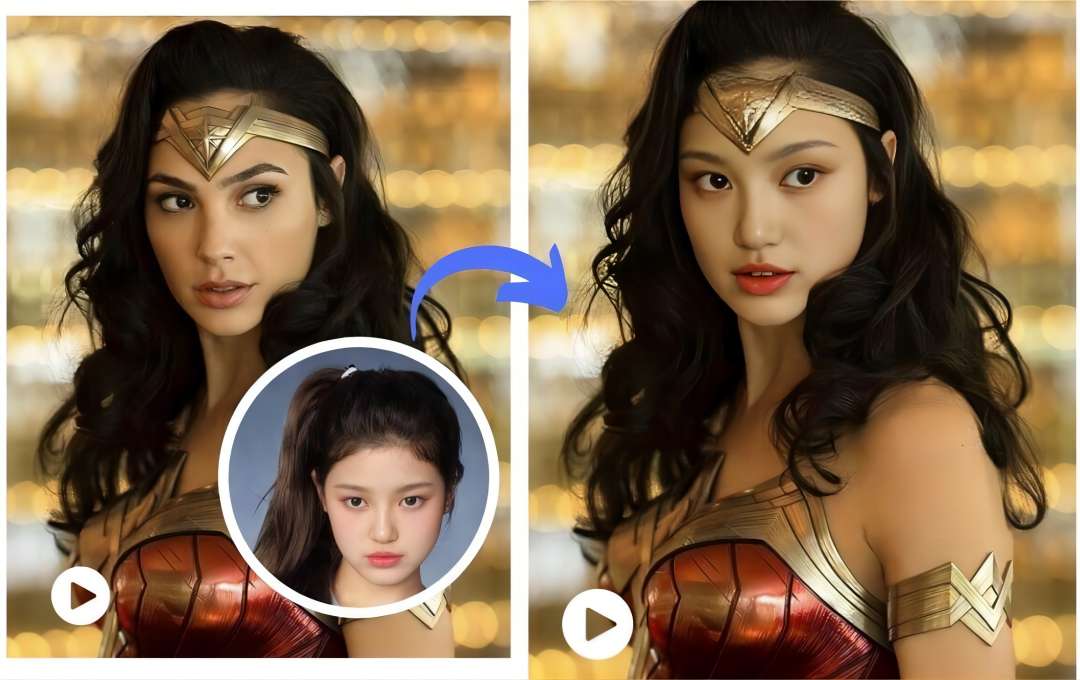
The digital content landscape has experienced a paradigm shift. The manipulation and alteration of visual identity is no longer the sole domain of Hollywood or expensive production houses. It is now at the fingertips of every content creator. The key to this paradigm shift is AI face swap technology, which is a combination of deep learning and computer vision that enables the seamless swap of one person’s identity with another in images and videos. The need for high-fidelity video face swap and face swap video solutions has reached new heights. In this guide, we will delve into the mechanics, uses, ethics, and future of this revolutionary technology.
AI Face Swap: The 2026 Perspective
In its most basic form, AI face swap technology is the use of artificial intelligence to locate a face in a source image or video and “transfer” it to a target body. But in 2026, this definition has expanded. Today, it’s not simply a matter of “pasting” pixels. The geometry of the skull, the skin texture, and the physics of light are all taken into account to make the transfer seamless. The key to high-quality face swap video results is Generative Adversarial Networks (GANs), although we are witnessing a growing trend towards Diffusion models.
- GANs: Employ a “generator” to produce the face and a “discriminator” to inspect for errors, yielding highly detailed and contrast-rich images.
- Diffusion Models: These models have better stability and realism in complex lighting conditions, which makes the video face swap process seem more natural.
The Evolution of Healthcare 4.0 and AI Integration
Although face swapping is commonly linked to entertainment, its origins in Healthcare 4.0 are important. The same algorithms that are used in video face swap are also used in medical imaging to reconstruct facial features for plastic surgery simulations or to assist patients with dysmorphia in visualizing the outcome. “Digital Twin” technology is the backbone of smart healthcare systems, allowing for precision diagnostics and personalized treatment plans that were previously impossible.
Key Use Cases for Video Face Swapping
A. Marketing and Personalized Advertising
Brands in 2026 do not create one-size-fits-all commercials. Brands can use face swap video technology to create personalized commercials where the viewer can see themselves interacting with the product.
- Virtual Try-ons: Trying on a new look or hair style before buying.
- Localized Influencers: Exchanging the face of a global ambassador with that of a localized actor to appeal to a particular set of regional demographics.
B. Film and Post-Production
The days when costly reshoots were necessary because of changes in casting or the unavailability of actors are gone. A high-quality video face swap is used by filmmakers to achieve continuity and even to resurrect historical figures for educational documentaries.
C. Social Media and the Creator Economy
For content creators on TikTok and Instagram, face swap video content has become one of the main engagement drivers. Whether it is “acting” in a famous movie scene or making memes, the entry level has never been lower.
Introducing PixNova AI: Your Gateway to Innovation
In a world where quality and usability are of utmost importance, PixNova AI is a revolutionary platform that provides a variety of innovative online image generation, editing, and interaction solutions. These include AI-powered face-swapping, image creation, one-click outfit changes, AI virtual character interactions, and many more.
Through its focus on user experience and high-fidelity results, PixNova AI makes it possible for both professionals and hobbyists to push the boundaries of their imagination without having to invest in expensive hardware or technical know-how. Whether you are looking for a professional video face swap or a quick meme-style face swap video, the platform delivers studio-grade results in seconds.
The Need for Explainable AI in Face Swaps
With the increasing realism of deepfakes, the need for XAI 2.0 (Explainable AI 2.0) has arisen as a regulatory and technological imperative. XAI 2.0 concentrates on:
- Transparency: Adding metadata or “watermarks” to indicate that a video face swap is AI-created.
- Auditability: The ability for human experts to review why an AI system made a particular facial mapping, to ensure the result is free from bias.
- Security: Leveraging XAI to identify malicious deepfakes by looking for “unnatural” patterns in the algorithmic data that could potentially go unnoticed by the human eye.
How to Achieve the Perfect Face Swap Video
For a professional-level outcome to be achieved using a face swap video editor, the following technical considerations need to come together:
- Source Resolution: Make sure the “face” you are uploading is high-resolution (at least 1024×1024 pixels).
- Lighting Consistency: It is best if the lighting conditions on the source face and the target video are consistent.
- Angle Alignment: Although current AI technology is capable of handling profiles, the best results for a video face swap are obtained from a front-facing source image.
- Expression Mapping: It is now possible to link blinking and micro-expressions with the help of advanced tools, which are essential for overcoming the “Uncanny Valley.”
Ethical Considerations and Data Privacy
“Great power is the accompaniment to great responsibility” is a common enough adage. But in 2026, the use of AI requires strict adherence to ethical standards:
- Consent: Use a subject’s likeness only when given clear, explicit consent.
- Misinformation: Do not create misleading political or news-oriented material using face swap video technology.
- Data Protection: Choose services such as PixNova AI, which value user privacy above all else and do not retain any kind of biometric information beyond what is necessary for data generation.
Future Trends: Real-time Live Swaps and Beyond
We’re on the cusp of “Live AI.” Soon enough, video face swap technology will be in real-time action during video conferencing (Zoom and Teams) to enable “digital makeup” or privacy during critical gatherings. But numerous haptic feedback and VR technologies will enable users to not only see their digital avatar but also feel its presence, blending the physical and digital worlds permanently.
In the early days of AI, a face swap video often suffered from “jitter” or blurry edges. In 2026, high-end platforms utilize temporal consistency algorithms. This means the AI looks at the frame before and the frame after to ensure the face doesn’t “pop” or shift unnaturally. When performing a video face swap, the system now calculates occlusion—understanding when a hand or an object passes in front of the face—to maintain the illusion perfectly.
Conclusion: Embracing the AI Creative Frontier
The journey of AI-driven media is just beginning. The transition from Hollywood-only effects to a world where anyone can create a video face swap marks the true democratization of visual storytelling. The days when high-definition video face swap results were a distant dream are gone—indeed, this technology is changing the way we interact and market ourselves and others in a radical and unprecedented manner. By selecting platforms that are video face swap compliant, creators can ensure their work is not only visually stunning but also ethically sound and technically superior.
As we look forward, the democratization of these tools via platforms like PixNova AI ensures that the future of digital media is inclusive, imaginative, and infinitely flexible. Whether you are producing a feature film or a personalized face swap video for friends, the power of 2026 AI is here to elevate your vision.