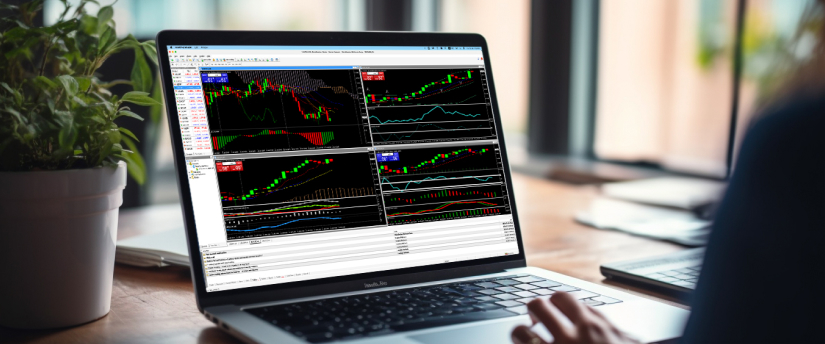

If you watch a chart long enough, you start noticing that price doesn’t just move for no reason. It reacts, pauses, speeds up, slows down, and sometimes changes direction when you least expect it.
For many traders in UK, this is one of the more confusing parts of Forex trading. You can see movement clearly, but the reason behind it isn’t always obvious in the moment.
It often comes down to people making decisions
Behind every movement is someone buying or selling. That could be a bank, a company, or an individual trader, but all of those decisions combine into what you see on the chart.
When more people are buying than selling, price tends to move up, and when the opposite happens, it moves down. It sounds simple, but in Forex trading, that balance is constantly shifting.
Bigger factors sit behind those decisions
Those buying and selling decisions don’t happen randomly. They’re influenced by things like how strong an economy is, how stable a country feels, or what people expect might happen next.
For traders in UK, this part isn’t always visible right away. You just see the result on the chart, while the reasons sit quietly in the background of Forex trading.
Interest rates quietly influence direction
One of the less obvious drivers is interest rates. When they change, or even when people expect them to change, it can shift how attractive a currency feels.
This doesn’t always create instant movement, but it builds pressure over time. In Forex trading, some of the bigger trends come from these slower, underlying changes.
News can disrupt everything quickly
Then there are moments when everything speeds up. A report gets released, or something unexpected happens, and price reacts almost immediately.
These moves can feel sudden, especially if you weren’t expecting them. For traders in UK, this is often when Forex trading feels unpredictable, even though there is usually a reason behind it.
Not everything is driven by logic
Sometimes price moves simply because people expect it to. If enough traders believe something will happen, they act on it, and that action itself moves the market.
This is where sentiment comes in. In Forex trading, what people think can matter just as much as what is actually happening.
Central banks influence the bigger picture
Every now and then, you’ll notice stronger, more lasting moves. These are often linked to central banks, which make decisions about interest rates and economic policy.
Their actions don’t just affect short term movement. For traders in UK, this is where Forex trading starts to connect with the bigger picture beyond the chart.
The time you trade also matters
Price doesn’t behave the same way all day. There are periods where the market feels active and structured, and others where it feels slower or less clear.
This depends on which part of the world is active at the time. In Forex trading, understanding this helps explain why the same chart can feel different at different hours.
Sometimes it just feels unclear
Even when you understand these factors, there will still be moments where price doesn’t make sense. It might move without a clear reason, or react in a way you didn’t expect.
That’s part of the process. In Forex trading, multiple things are happening at once, and not all of them are visible.
It becomes clearer with time
You don’t need to understand everything immediately. Most traders in UK start by just watching, and over time, certain patterns begin to stand out.
You start to connect movement with possible reasons, even if it’s not always precise. And that’s usually when Forex trading starts to feel less random and a bit more familiar.