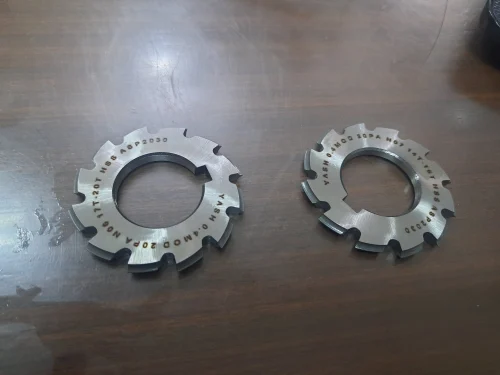

Precision gear production requires advanced machining tools that can create accurate tooth profiles and maintain consistent performance across large production runs. Among the most widely used tools in gear manufacturing is the involute gear milling cutter, a specialized cutting tool designed to generate the involute gear profile used in most mechanical systems. To maintain consistent machining quality, manufacturers also depend on trusted form milling cutters suppliers who provide high-precision tooling and technical expertise for industrial machining applications.
Modern industries such as automotive manufacturing, aerospace engineering, robotics, and heavy machinery rely heavily on accurate gear systems. The quality of these systems depends not only on machining equipment but also on the cutting tools used to shape gears and mechanical components. Selecting the correct tools and working with reliable suppliers ensures efficient production and consistent product quality.
Understanding the Involute Gear Profile
Most gears used in modern machinery follow the involute tooth profile because of its ability to provide smooth and reliable power transmission. The involute curve allows gears to maintain a constant velocity ratio even when minor alignment variations occur. This characteristic makes involute gears highly reliable in demanding mechanical environments.
To create this precise tooth geometry, manufacturers use an involute gear milling cutter that is engineered to match the exact involute curve required for the gear design. The cutter removes material from the gear blank while maintaining the correct tooth spacing, pressure angle, and pitch.
Producing gears with accurate geometry requires precision manufacturing techniques. Advanced CNC grinding machines are used to produce cutting tools with highly accurate profiles. When properly manufactured, the cutting tool can generate gears that operate quietly, efficiently, and with minimal vibration.
Importance of Precision Tool Design
In gear manufacturing, tool design plays a critical role in determining machining accuracy. Even small deviations in cutter geometry can affect the final gear profile and reduce the efficiency of the mechanical system.
The involute gear milling cutter must be manufactured with strict dimensional tolerances to ensure accurate gear tooth formation. Precision grinding, heat treatment, and inspection processes help ensure that the cutter maintains its geometry during machining operations.
Tool designers must also consider factors such as module, pressure angle, and the number of gear teeth. These parameters determine the exact cutter geometry required to produce the desired gear profile. Proper tool design ensures smooth gear meshing and long service life for the finished component.
Role of Reliable Tool Suppliers
Selecting the right tooling partner is just as important as selecting the correct cutting tool. Experienced form milling cutters suppliers provide tools that meet strict engineering standards and support efficient machining processes.
Reliable suppliers invest in advanced manufacturing equipment and quality control systems to ensure consistent tool accuracy. Their expertise allows manufacturers to select tools that match specific machining requirements and production conditions.
Working with established suppliers also provides access to technical support and custom tooling solutions. Some gear manufacturing applications require specialized cutter designs that match unique gear specifications. Experienced tooling providers can develop custom tools that improve production efficiency and product quality.
Materials Used in Milling Cutters
Cutting tools used in gear manufacturing must withstand heavy machining loads and high temperatures. To meet these requirements, tools are typically produced from high-performance materials such as high-speed steel or carbide.
High-speed steel provides excellent toughness and wear resistance, making it suitable for many milling operations. Carbide tools offer greater hardness and allow higher cutting speeds, which improves productivity in high-volume manufacturing environments.
In addition to high-performance materials, modern tools often include advanced coatings that reduce friction and increase resistance to heat and wear. These coatings help maintain cutting efficiency and extend tool life during demanding machining operations.
Industrial Applications of Gear Milling Tools
Precision milling tools are used in a wide range of industries that rely on gears and mechanical transmission systems. Automotive manufacturers use gear cutting tools to produce transmission gears, differential gears, and engine components.
In these applications, the performance of the involute gear milling cutter directly affects the accuracy and reliability of the finished gear. Accurate machining ensures smooth gear engagement and efficient power transmission within the mechanical system.
Industrial machinery manufacturers also depend on precision gear components for equipment such as compressors, pumps, conveyors, and turbines. Reliable gears help maintain stable operation and reduce mechanical wear in these systems.
Aerospace engineering also requires extremely accurate gear manufacturing. Aircraft systems must meet strict safety and reliability standards, and high-precision cutting tools help ensure that gear components meet these demanding requirements.
Choosing the Right Tool Supplier
When selecting tooling partners, manufacturers must evaluate several factors including manufacturing capability, quality assurance processes, and technical expertise. Experienced form milling cutters suppliers typically operate advanced CNC grinding facilities and maintain strict quality inspection procedures.
These suppliers can recommend the most appropriate tools based on machining conditions, workpiece material, and production volume. Their technical knowledge helps manufacturers optimize machining performance and reduce tool wear.
Another advantage of working with established suppliers is access to consistent product quality and reliable delivery schedules. This ensures that manufacturers can maintain stable production operations without unexpected tooling delays.
Maintenance and Tool Longevity
Proper maintenance is essential for maximizing the lifespan of precision cutting tools. Regular inspection helps detect wear before it affects machining accuracy or surface finish.
When an involute gear milling cutter becomes dull after extended use, it can often be reconditioned through precision grinding. Regrinding restores the cutting edges and allows the tool to continue producing accurate gear profiles.
Proper storage and careful handling are also important for protecting cutting tools from damage. Tools should be stored in protective cases and kept free from contamination or accidental impact.
Maintaining correct machining parameters such as cutting speed, feed rate, and coolant flow also contributes to longer tool life and improved machining performance.
Advances in Modern Tool Manufacturing
Technological advancements continue to improve the design and performance of cutting tools used in gear manufacturing. Computer-aided design software allows engineers to simulate machining operations and optimize cutter geometry before production begins.
Modern CNC grinding machines produce highly accurate cutting tools with minimal variation between units. These machines ensure that each tool meets strict dimensional standards required for precision machining.
Automation and digital monitoring technologies are also improving production efficiency. Smart machining systems can track tool wear and cutting conditions in real time, allowing operators to schedule maintenance before tool performance declines.
These innovations help manufacturers maintain high productivity while ensuring consistent product quality.
Conclusion
Precision cutting tools are essential for producing reliable gears used in modern industrial machinery and mechanical systems. A well-designed involute gear milling cutter enables manufacturers to generate accurate gear tooth profiles that ensure smooth power transmission and efficient mechanical operation.
Working with trusted form milling cutters suppliers provides manufacturers with access to high-quality tools, advanced engineering expertise, and reliable technical support. By selecting the right tooling partners and maintaining cutting tools properly, manufacturers can achieve efficient production, consistent machining quality, and long-lasting mechanical performance.